

You can reach World Water Academy by telephone: +31 030 606 94 00 or e-mail: info@worldwateracademy.nl.
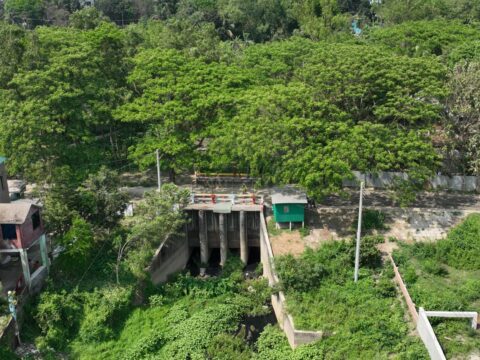
Flowing Forward: inception visit in Bangladesh
Bangladesh is working towards a more resilient and self-reliant water sector. Through the Flowing Forward programme, World Water Academy supports key institutions in strengthening Asset Management and Public–Private Partnership capacity, with a focus on better decision-making and long-term investment planning.
Start of the programme
In spring 2026, World Water Academy (WWA) conducted an extensive inception visit to Bangladesh as part of the Flowing Forward programme: Strengthening Asset Management and Public–Private Partnership Capacity in Bangladesh’s Water Sector. The mission marked the beginning of a long-term collaboration focused on strengthening institutional capacity, improving infrastructure governance and supporting sustainable investment in Bangladesh’s water sector.
Stakeholder engagement and programme design
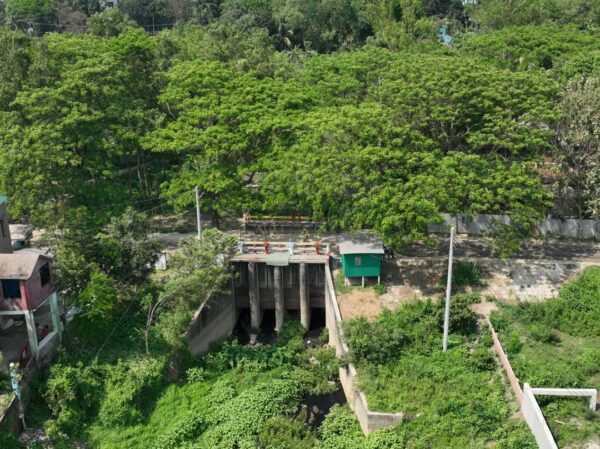
During the inception phase, the WWA delegation engaged with a broad range of stakeholders, including the Bangladesh Water Development Board (BWDB), Public–Private Partnership Authority (PPPA), Chattogram WASA (CWASA), Dhaka WASA (DWASA), BEZA, LGED, CCC, universities, knowledge institutes, private-sector organisations and Dutch water partners. Through workshops, stakeholder consultations, validation sessions and field visits, the programme team explored current sector challenges and jointly shaped the foundations of the programme.
Key challenges in Asset Management and PPP
A central theme throughout the inception visit was the urgent need to move from reactive infrastructure maintenance towards more structured, lifecycle-based Asset Management. While organisations such as BWDB possess strong technical expertise and extensive infrastructure data systems, stakeholders consistently highlighted the need for stronger connections between data, planning, budgeting and decision-making. The programme therefore focuses not only on technical knowledge, but also on strengthening organisational coordination, governance processes and practical “data-to-decision” capability.
The inception visit also confirmed growing momentum around Public–Private Partnerships (PPPs) in Bangladesh’s water sector. Discussions with PPPA, CWASA, utilities and private-sector stakeholders demonstrated increasing interest in PPP implementation for water supply, wastewater treatment and industrial water services. However, stakeholders also emphasised that practical implementation capacity remains limited, particularly in the areas of project identification and screening, development of bankable business cases, structuring viable payment and revenue mechanisms, risk allocation and communicating PPP propositions to decision-makers and potential financiers.
Learning from real sector cases
Several ongoing initiatives were identified as valuable practical learning cases for the programme, including the BWDB Asset Management Roadmap, Polder 31 and multiple PPP-related developments involving CWASA, BEZA and the RAJUK/Purbachal water supply project. Rather than relying solely on theoretical training, the programme uses these real sector initiatives as practical learning environments where participants can directly apply new knowledge and skills.
A practice-oriented and embedded learning approach
A key outcome of the inception phase was the validation of a strongly practice-oriented learning approach. The programme combines e-learning, classroom training, workshops, practical assignments, mentoring, peer learning and exposure visits into one integrated learning journey. Separate learning pathways are being developed for field-level staff, mid-level professionals and senior management, reflecting the different roles and responsibilities within water-sector organisations.
An important insight from the inception phase was the strong need for continuity and institutional embedding. High staff rotation and changing organisational responsibilities continue to affect long-term knowledge retention across the Bangladeshi water sector. To address this, the programme includes reusable e-learning modules, Training of Trainers trajectories and alignment with existing Bangladeshi training structures and institutions.
Co-creation and partnership
The programme is built around co-creation and long-term partnership. Bangladeshi and Dutch experts jointly contribute to training design, case development and implementation, ensuring that learning remains closely connected to sector realities and institutional priorities. This collaborative approach reflects World Water Academy’s broader philosophy: sustainable impact emerges when practical knowledge, institutional ownership and long-term cooperation are combined.
Looking ahead
With the inception phase completed, the next stage of Flowing Forward will focus on co-creating training materials and launching the first training deliveries. By connecting practical learning, institutional strengthening and international knowledge exchange, the programme aims to contribute to a more resilient, adaptive and future-proof water sector in Bangladesh.
More information about this case?

Feel free to ask us about our products and courses